Ho Chi Minh City Proposes 2028 Low-Emission Zone for Downtown, Thu Thiem
Ho Chi Minh City is gathering feedback on a draft green transport resolution that would launch a 15.6-square-kilometer low-emission zone across the downtown core and the Thu Thiem New Urban Area on January 1, 2028.
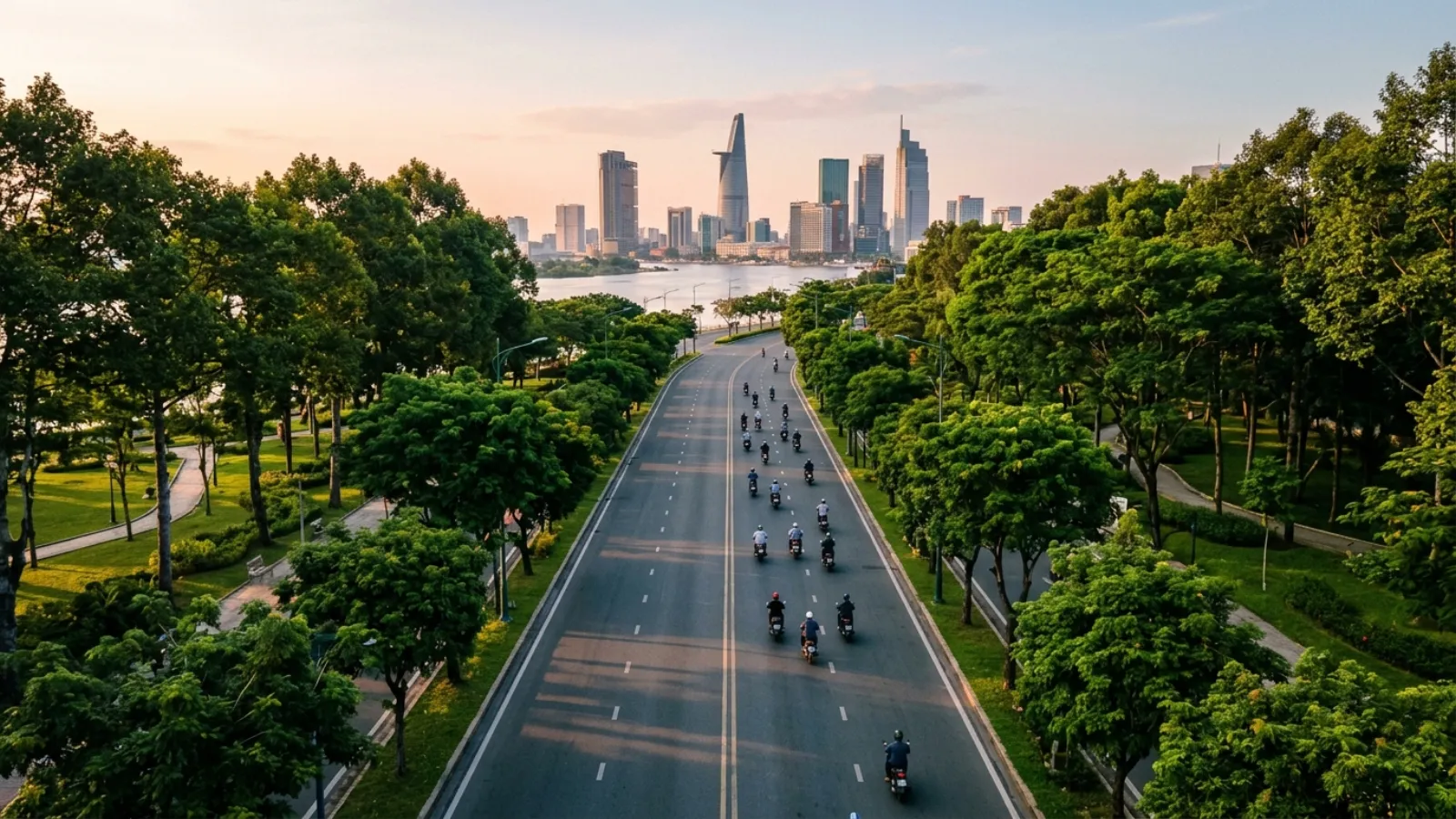
- A draft resolution scheduled for submission to the Ho Chi Minh City People's Council proposes launching a 15.6-square-kilometer low-emission zone on January 1, 2028 across the 930-hectare downtown core and the Thu Thiem New Urban Area across the Saigon River, before expanding inside Beltway No. 2 in 2030.
- Restrictions will roll out in phases—starting in 2028–2029 with Level 5 standards for taxis, contract cars under nine seats, and trucks up to one ton, followed by Level 5 for private cars and Level 4 for personal motorbikes in 2032, and a full gasoline motorbike ban and fossil-fuel vehicle entry fee in the zone and Binh Khanh, An Thoi Dong, and Can Gio from January 1, 2035.
- Alongside transit targets for 2030 (300 bus routes, seven metro lines totaling about 255 km, 11 park-and-ride sites, and about 8,000 public bikes and e-motorbikes), the draft proposes vehicle conversion subsidies through December 31, 2030 and city-covered first motorbike emission inspection fees for permanent residents through December 31, 2028.
Ho Chi Minh City is taking feedback on a draft green transport and low-emission zone (LEZ) resolution for the Ho Chi Minh City People's Council. Still a draft, it starts a ~15.6 sq.km LEZ on January 1, 2028 (930-ha downtown plus Thu Thiem across the Saigon River) through late 2029, expanding inside Beltway No. 2 in 2030 as transit and infrastructure allow.
Phased Rules and Support
Gasoline vehicles face phased rules, not an immediate ban. In 2028–2029, taxis, contract cars under 9 seats, and trucks up to 1 ton need Level 5 (national 5-tier scale = Euro 1–5) to enter. From 2032, private cars need Level 5 and personal/non-commercial motorbikes Level 4; some non-compliant vehicles may enter 10 p.m.–6 a.m. From January 1, 2035, the LEZ and Binh Khanh, An Thoi Dong, and Can Gio ban gasoline motorbikes (barring special vehicles) and charge fossil-fuel vehicle fees. Elsewhere, motorbikes need Level 2 on January 1, 2030, Level 3 in 2032, Level 4 in 2035, and clean energy citywide on January 1, 2040 (except special/disabled vehicles).
Intra-city buses must switch to clean energy from 2027, and taxis and ride-hailing/delivery motorbikes by 2030. The 2030 goal sets 300 bus routes, 7 metro lines (~255 km), 11 park-and-ride sites, and ~8,000 public bikes, e-bikes, and e-motorbikes. Aid through December 31, 2030 offsets new vehicle costs, registration tax, and plate fees (up to VND20 million, ~$760, per e-motorbike for urban poor households), plus permanent residents' first motorbike emission test fee through December 31, 2028.
Foreigners commuting via Thu Thiem and downtown should watch the draft timeline.
Source: Tuoi Tre News.
Tuoi Tre News · Published Oct 14, 2026
Open original source →